Osmometers – Keeping Clinical Labs Up and Running
Rapid innovations and the launch of new products are taking osmometry to the next level by offering a perfect balance of ease-of-use and improved analytical performance. With the rising number of pharmaceutical and biopharmaceutical companies seeking technologically-advanced tools for several quality check and process controls, analysts at Transparency Market Research (TMR) forecast steady growth of the global osmometers market at a CAGR of ~3% during the period of 2019-2027. Osmometers have garnered significant traction as a viable diagnostic tool that helps indicate the total concentration of dissolved solids present in plasma and other fluids. In an attempt to align with the ongoing 'patient-centric' trend in the healthcare industry, clinical labs are making great strides to report accurate patient results, while biopharmaceutical labs are focusing on developing quality therapeutics – potentially raising the demand for advanced osmometers.
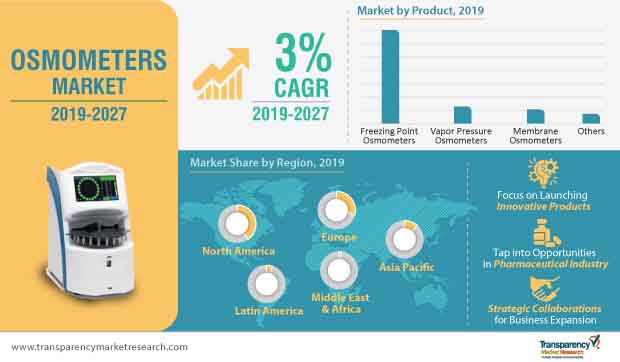
To know the segments analyzed in the TMR report, ask for a brochure here.
Multi-sample Osmometers to Gain Center Stage
Single sample osmometers continue to account for a major share of manufacturers’ bottom lines, in view of offering sufficient testing capacity and performance. However, these systems require a significant amount of manual sample handling and tech time to complete the osmolality testing – misaligning with end user trends of improving automation and reducing labor requirements. To that end, manufacturers are focusing on increasing the production of multiple-sample osmometers, which are specifically designed not only to automate various aspects of osmolality testing but also to offer a host of added technological benefits as compared to the single sample variants.
Freezing point osmometers continue to account for higher demand as compared to vapor pressure and membrane osmometers, according to TMR’s study. Independent from different physical characteristics of the liquid solution, along with user-friendly operational modes, freezing point osmometers have gathered significant momentum as the industry-preferred solution, and remain a gold standard in pharmaceutical research, clinical chemistry labs, and quality control labs, worldwide. As 7 in 10 osmometers sold in the market are based on freezing point depression, manufacturers are specifically focused on this category.
To know more about TMRs unique offerings for Osmometers Market, request a sample here
North America Leads, But Opportunities Abound in Developing Countries
While the war of innovation supremacy continues among stakeholders in the osmometers market, expansion of distribution networks through strategic collaborations remains a key focus area for increased global reach. North America and Europe continue to offer greater opportunities, in the view of high healthcare expenditure per capita and rise in the demand for laboratory automation. In consequence, manufacturers are targeted towards leveraging advanced technologies to not only develop 'best-in-class' osmometers but also to retrofit and renovate conventional equipment.
Market consolidation in developing countries in Asia Pacific will remain a key to gain competitive edge, as the region is increasingly being recognized for its unique healthcare ecosystems and innovative business models. TMR’s analysts portend that, the osmometers market in Asia Pacific will record a relatively high CAGR as compared to other regions, during the predefined timeframe. The rising need for automation in clinical laboratory settings and an increase in the R&D investments of pharmaceutical and biotech companies in the region are further likely to lead to the realignment of manufacturers’ strategies.
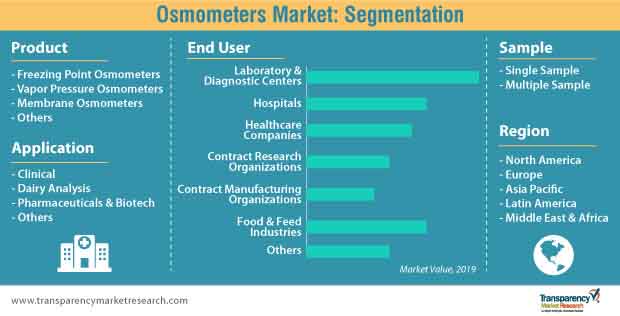
Get a snapshot of the latest report on Osmometers Market with Custom Report here
More Trending Reports by Transparency Market Research – https://www.biospace.com/article/erectile-dysfunction-ed-drugs-market-high-awareness-aids-expansion-of-market-in-north-america/
Comments
Post a Comment