Travelers Seek Solutions to Counter Diarrheal Pathogens in Tropical Regions
International travel has gained significant momentum in the past decade and the trend is showing no signs of slowing down. As per the data released by the World Tourism Organization (UNWTO), an astounding 1.4 billion international tourist arrivals were recorded - a 6% rise from 2017. As per the observable trends, tourists are traveling in huge numbers to tropical and sub-tropical countries, including Thailand, Spain, and India. However, tourists are at a high risk of being exposed to diarrheal pathogens in these regions and thus, traveler’s diarrhea has emerged as one of the most common health problems faced by international travelers.
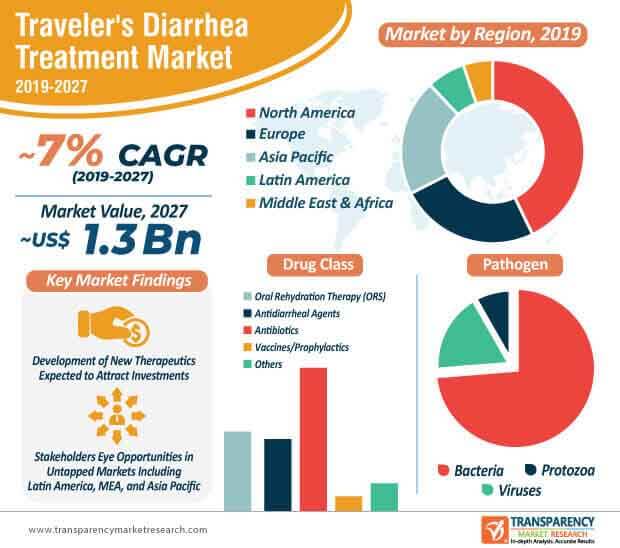
Traditionally, antibiotic prophylaxis is used to prevent traveler’s diarrhea, which is primarily caused by bacterial etiologies. The traveler’s diarrhea treatment market is expanding at a rapid pace, as awareness among travelers related to ill effects of traveler’s diarrhea is increasing. Furthermore, drug approvals by the FDA, rise in the number of research activities, and development of new therapeutics are some of the leading factors that are expected to drive the traveler’s diarrhea treatment market. The market for traveler’s diarrhea treatment is expected to reach a value of ~US$ 1.3 Bn by 2027.
Request the Coronavirus Impact Analysis on this Markets - https://www.transparencymarketresearch.com/sample/sample.php?flag=covid19&rep_id=13433
Request a sample to get extensive insights into the Traveler’s Diarrhea Treatment Market
FDA Approvals for New Drugs for Treatment of Traveler’s Diarrhea
Antibiotics used to treat and manage traveler’s diarrhea have evolved at a rapid pace in the past 50 years due to a range of factors, including drug resistance, costs, and side-effects. However, with consistent developments in research, new and improved treatments for traveler’s diarrhea are entering the traveler’s diarrhea treatment market.
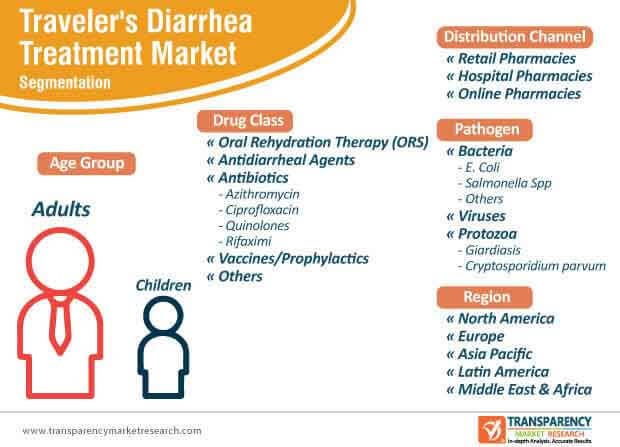
The Food and Drug Administration (FDA) has given approval to several new treatments and drugs in recent years. For instance, Aemcolo, an oral antibacterial rifamycin, was approved by the FDA in November 2018 to treat traveler’s diarrhea caused by E.coli. Clinical studies have revealed that rifamycin has greater efficiency in reducing the symptoms of diarrhea symptoms compared to placebo. Antibiotics are primarily recommended to treat severe traveler’s diarrhea. Despite a few side effects, within the drug class segment, antibiotics are likely to stay ahead with a market share of ~51% during the forecast period. The management and treatment of traveler’s diarrhea are expected to evolve, owing to the formulation of different guidelines laid down by regulatory bodies worldwide. As per the new guidelines, the use of antibiotics for mild traveler’s diarrhea is not recommended, as they have been linked to adverse events.
Antidiarrheal agents, such as bismuth subsalicylate and loperamide, are predominantly used in conjunction with antibiotics to offer instant relief from the symptoms of traveler’s diarrhea. The treatment of traveler’s diarrhea primarily depends on the severity of the treatment. Oral rehydration solutions are ideally used to treat traveler’s diarrhea in children, infants, and geriatric population, as these patients are more susceptible to dehydration and electrolyte imbalance. The oral rehydration solution and antidiarrheal segments of the traveler’s diarrhea treatment market are collectively expected to reach a value of ~US$ 511 Mn by the end of 2027.
Bacteria to Retain Lead as Primary Traveler’s Diarrhea-causing Pathogen
Traveler’s diarrhea is predominantly caused by pathogens such as viruses, bacteria, and protozoa. Of these, nearly 80% of the cases are caused by bacteria, and thus, this segment is projected to account for ~ 69% share of the traveler’s diarrhea treatment market in 2019. Viruses are the causative agents for ~5-10% cases depending on geographical location. As per the Centers for Disease Control and Prevention data, norovirus and rotavirus are the leading types of viruses that cause traveler’s diarrhea. E.coli and Salmonella Spp are the two major bacteria types responsible for traveler’s diarrhea. According to the British Medical Journal, the prevalence of traveler’s diarrhea is higher among travelers visiting regions in South Asia and Southeast Asia. Thus, the traveler’s diarrhea treatment market is expected to grow during the forecast period.
Stuck in a neck-to-neck competition with other brands? Request a custom report on “Traveler’s Diarrhea Treatment Market”
More Trending Reports by Transparency Market Research –http://www.prnewswire.com/news-releases/serious-lack-of-donors-of-organs-is-helping-to-increasing-popularity-of-heart-pump-devices-market-valuation-to-rise-up-to-us4-3-bn-by-2027--notes-tmr-301026081.html
Comments
Post a Comment